In a landmark policy transformation, the National Electric Power Regulatory Authority (NEPRA) has unveiled plans to replace the existing net metering framework with a gross metering system for new rooftop solar installations across Pakistan. This significant regulatory shift comes as authorities address mounting concerns about the financial sustainability of the power grid and equitable cost distribution among consumers.
The proposed NEPRA Prosumer Regulations (NPR), detailed in an 18-page draft document, marks a critical turning point in Pakistan's renewable energy journey. As stakeholders evaluate the implications of this policy change, understanding the mechanics and impact of gross metering becomes essential for prospective solar investors and current system owners alike.
Understanding the Policy Shift: Net to Gross Metering
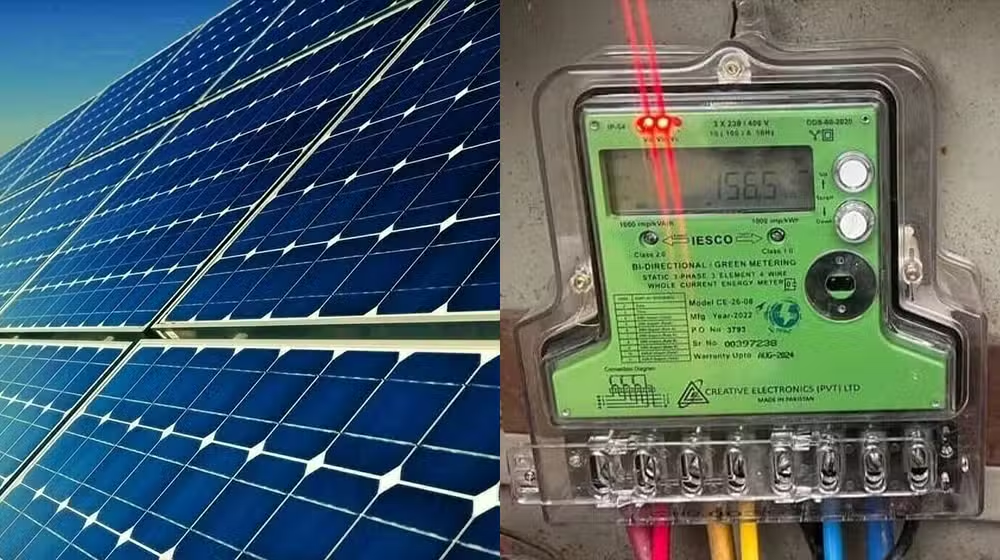
The transition from net metering to gross metering represents a fundamental change in how rooftop solar consumers will interact with Pakistan's electricity grid. Under the current net metering system, solar users benefit from electricity exports being adjusted against their imports, effectively reducing their power bills through a netting process.
The new gross metering mechanism introduces a distinctly different approach. Future solar consumers will be compensated at a fixed feed-in tariff for all electricity exported to the grid, while electricity drawn from the grid will be billed separately at prevailing retail rates. This separation eliminates the current offset system and creates a more transparent trading relationship between solar prosumers and distribution companies.
Net Metering vs. Gross Metering: Key Differences
| Feature | Net Metering (Current) | Gross Metering (Proposed) |
|---|---|---|
| Buyback Rate | Rs. 22 per unit | Rs. 11.30 per unit |
| Contract Period | 7 years | 5 years (renewable) |
| Billing Method | Net consumption basis | Separate export/import billing |
| Applicability | Existing contracts protected | New installations only |
The New Feed-in Tariff Structure
Central to the gross metering framework is the proposed feed-in tariff of Rs. 11.30 per unit for electricity exported to the grid. This rate reflects a significant reduction from the current net metering buyback rate of Rs. 22 per unit, aligning more closely with wholesale electricity costs and utility-scale solar project tariffs.
The five-year contract duration offers prosumers medium-term certainty, with provisions for extension based on mutual agreement between consumers and distribution companies. This flexibility allows for periodic reassessment as market conditions and technology costs evolve.
Financial Impact Projections
According to Power Division estimates, the rapid expansion of rooftop solar has already led to significant grid revenue impacts:
Protection for Existing Solar Users
Recognizing the importance of contractual stability, NEPRA's proposal includes critical protections for existing net metering consumers. All current solar users operating under valid seven-year agreements will continue selling surplus electricity to the grid at the existing buyback rate of Rs. 22 per unit until their contracts expire.
This grandfather clause ensures that early adopters of solar technology who made investment decisions based on current regulations will not face retroactive policy changes. The protection mechanism maintains trust in the regulatory framework while transitioning to a more sustainable long-term model for new installations.
Rationale Behind the Policy Change
The proposed shift to gross metering addresses multiple challenges that have emerged from the rapid proliferation of rooftop solar installations across Pakistan. Energy officials point to several compelling factors driving this regulatory evolution:
Grid Sustainability Concerns
The existing net metering structure has inadvertently created a situation where the national grid functions as free battery storage for solar consumers. During peak solar generation hours, excess power flows into the grid at high buyback rates, while consumers draw electricity during evening and night hours without bearing proportionate infrastructure costs.
This asymmetric cost allocation has resulted in an estimated Rs. 2 per unit burden on non-solar grid consumers, raising equity concerns as conventional electricity users effectively subsidize solar prosumers' grid usage and backup power requirements.
Grid Stability Risks
The exponential growth of distributed solar generation poses operational challenges for grid management. With installed rooftop capacity approaching 6,000 megawatts nationwide and winter demand periodically dropping to 8,000-9,000 megawatts, the risk of excess daytime generation and grid instability has become increasingly pronounced.
Grid Stability Warning
Energy planners have cited international precedents, including Sri Lanka's experience where uncontrolled solar expansion reportedly contributed to a nationwide blackout. Pakistan's authorities are implementing preventive measures including smart metering systems capable of real-time monitoring and controlling electricity exports to maintain grid stability.
Economic Efficiency
Market dynamics have evolved significantly since net metering regulations were initially established. New utility-scale solar projects are now being contracted at tariffs below Rs. 10 per unit, making the Rs. 22 per unit net metering buyback rate economically unsustainable from a system perspective.
The proposed Rs. 11.30 per unit gross metering tariff strikes a balance between incentivizing distributed solar generation and preventing excessive cost transfers to the broader consumer base. This pricing structure reflects actual wholesale energy value while maintaining reasonable returns for solar investors.
Implementation Timeline and Stakeholder Consultation
NEPRA has initiated a comprehensive consultation process to gather input from all stakeholders before finalizing the gross metering regulations. The regulatory authority has invited written feedback within 30 days of the draft publication and may convene public hearings to address concerns and incorporate constructive suggestions.
This deliberative approach ensures that the final regulations balance multiple objectives: encouraging renewable energy adoption, maintaining grid sustainability, protecting existing investors, and ensuring equitable cost distribution across the consumer base.
Important Timeline
- Stakeholder Feedback Period: 30 days from draft publication
- Public Hearings: To be scheduled based on stakeholder response
- Existing Contracts: Protected until original expiry dates
- New Installations: Subject to gross metering upon final regulation implementation
Technology and Compliance Measures
To support the transition to gross metering and address identified system abuse issues, distribution companies have begun deploying advanced smart metering infrastructure. These intelligent devices provide real-time monitoring capabilities, enabling authorities to track electricity flows bidirectionally and identify irregularities.
Officials have documented cases where consumers with sanctioned loads of 10 kilowatts were exporting up to 20 kilowatts to the grid, indicating system capacity misrepresentation. Smart meters help prevent such practices through automated monitoring and remote export control capabilities, ensuring regulatory compliance and fair system usage.
Market Implications and Future Outlook
The proposed policy shift will inevitably influence investment decisions in Pakistan's distributed solar sector. While the reduced feed-in tariff may extend payback periods for new installations, the continued support for renewable energy through guaranteed purchase arrangements maintains the fundamental viability of rooftop solar projects.
The five-year contract period with extension provisions offers flexibility to adjust compensation mechanisms as technology costs decline and market conditions evolve. This adaptive framework positions Pakistan's solar sector for sustainable long-term growth while addressing immediate grid sustainability challenges.
Expert Analysis
The transition to gross metering represents a maturation of Pakistan's renewable energy policy framework. While the reduced compensation rate may initially dampen enthusiasm among potential solar investors, the policy addresses legitimate grid sustainability concerns that threatened the long-term viability of the entire distributed solar sector.
For prospective solar adopters, the key consideration shifts from pure financial arbitrage to genuine self-consumption optimization and energy independence. The gross metering structure rewards consumers who maximize on-site utilization of generated electricity rather than using the grid as free storage, which aligns incentives more closely with system efficiency objectives.
Property developers and real estate investors should carefully evaluate the implications of these policy changes when designing projects and advising clients. While solar remains a valuable asset for energy cost management and environmental sustainability, financial models require recalibration based on the new regulatory framework.
What This Means for Different Stakeholders
For Existing Solar Users
Current net metering consumers can proceed with confidence knowing their existing contracts remain fully protected. The Rs. 22 per unit buyback rate continues until contract expiry, providing certainty for the originally anticipated payback period. No immediate action is required, though users should monitor their contract end dates for future planning.
For Prospective Solar Investors
Individuals and businesses considering new solar installations should factor the Rs. 11.30 per unit export rate into their financial models. While returns will be lower than under net metering, solar projects remain economically viable, particularly for consumers with high daytime electricity usage who can maximize self-consumption.
The optimal system sizing strategy shifts from maximizing exports to matching daytime consumption patterns. Integrating battery storage solutions may become more attractive under gross metering, as stored solar energy displaces higher-cost grid imports rather than lower-value exports.
For Grid Consumers Without Solar
Non-solar electricity users stand to benefit from reduced cross-subsidization. The gross metering framework's lower compensation rate decreases the burden transfer from solar prosumers to conventional consumers, potentially moderating future tariff increases and promoting more equitable cost allocation across the user base.
Recommendations for Solar Stakeholders
As Pakistan's solar sector adapts to the evolving regulatory landscape, stakeholders should consider the following strategic approaches:
- Optimize System Design: Size new solar installations to match daytime consumption profiles rather than maximizing total generation capacity, improving self-consumption ratios under gross metering economics
- Evaluate Battery Integration: Consider energy storage systems to capture solar generation for evening usage, displacing higher-cost grid imports and improving overall project economics
- Monitor Regulatory Developments: Track the stakeholder consultation process and final regulation publication to understand exact implementation timelines and any modifications to the proposed framework
- Conduct Updated Financial Analysis: Recalculate project payback periods and returns based on the Rs. 11.30 per unit export rate, ensuring investment decisions reflect current regulatory realities
- Engage in Consultation: Stakeholders with substantive concerns or constructive suggestions should participate in NEPRA's feedback process to help shape the final regulations
Conclusion: Navigating the Transition
NEPRA's proposed shift to gross metering for new solar installations marks a pivotal moment in Pakistan's renewable energy evolution. While the change introduces new economic considerations for prospective solar investors, it addresses legitimate grid sustainability concerns and promotes more equitable cost distribution across the electricity consumer base.
The protection of existing contracts demonstrates regulatory commitment to contractual sanctity, while the new framework positions the distributed solar sector for sustainable long-term growth. As the consultation process unfolds and final regulations take shape, stakeholders across Pakistan's energy sector must adapt their strategies to align with this transformed policy landscape.
For the real estate and property development sectors, understanding these solar policy dynamics becomes increasingly critical as energy efficiency and sustainability features influence property values and marketability. Forward-thinking developers and investors will integrate these regulatory considerations into their planning processes, ensuring their projects remain competitive and aligned with evolving market expectations.